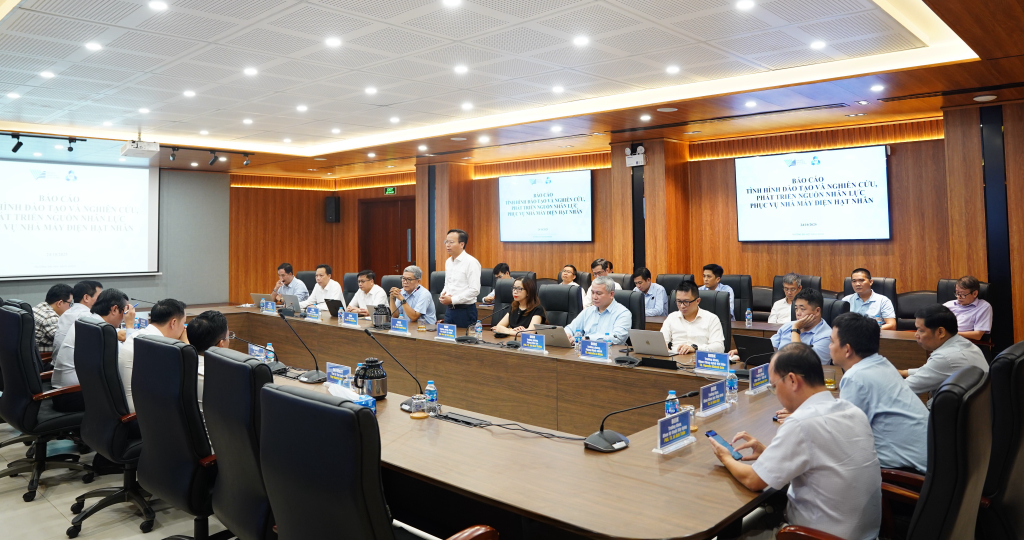
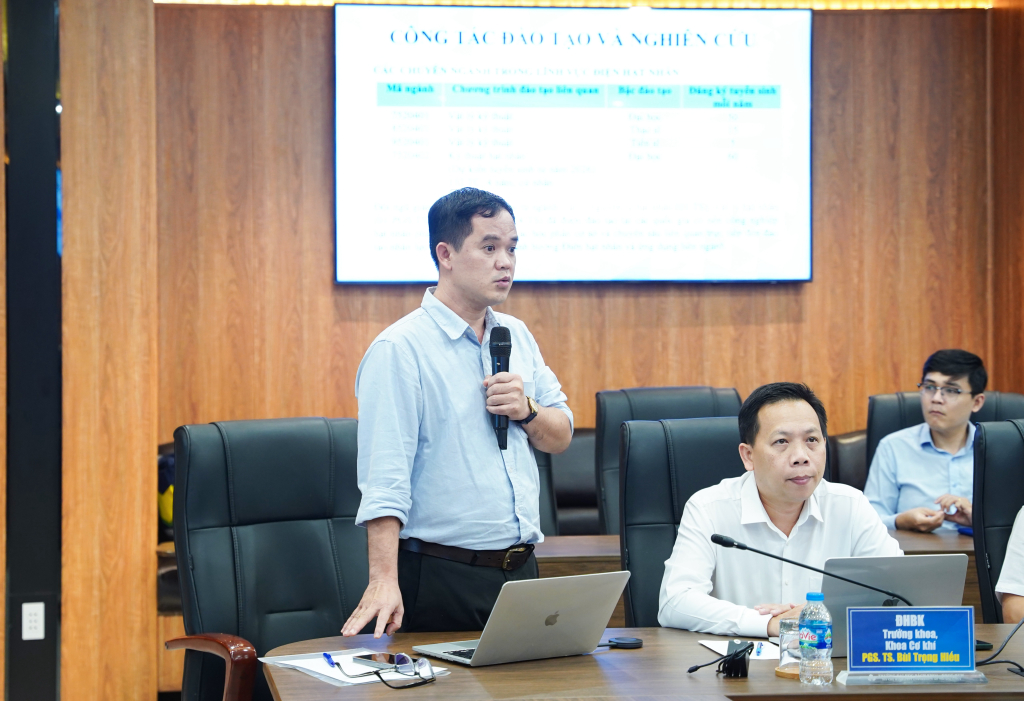
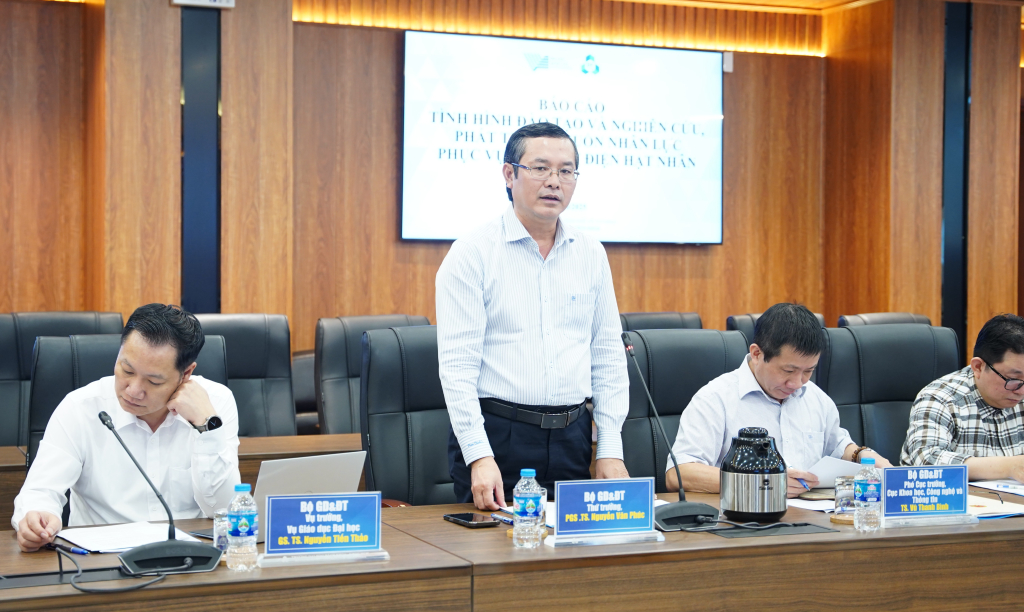
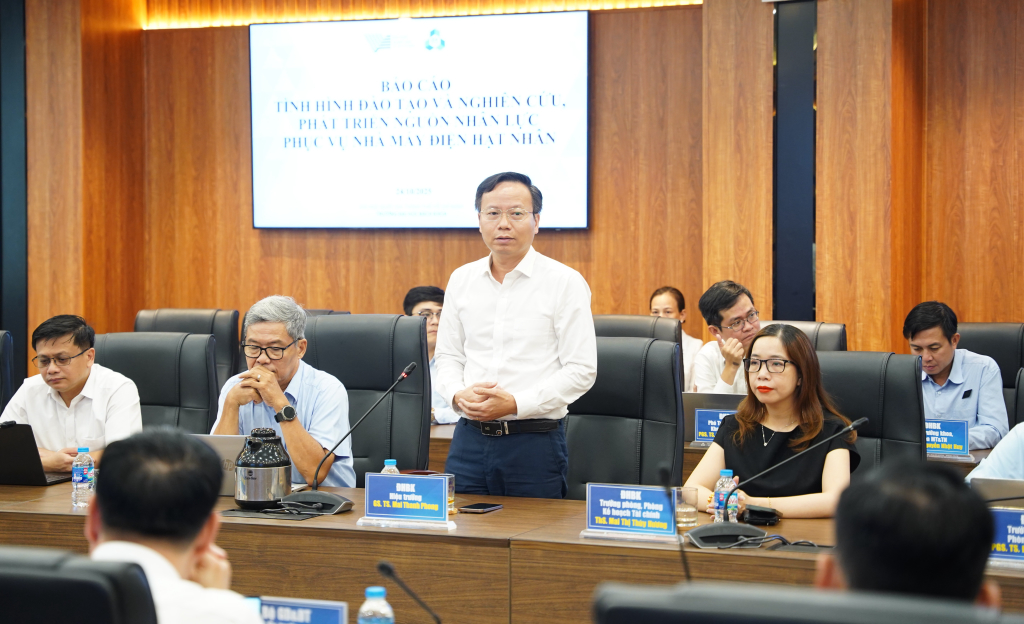
On the afternoon of October 24, a delegation from the Ministry of Education and Training (MOET), led by Deputy Minister Nguyen Van Phuc, held a meeting with Ho Chi Minh City University of Technology (HCMUT) – Vietnam National University Ho Chi Minh City (VNU-HCM) to assess the university’s capacity in training and research in the field of nuclear energy.
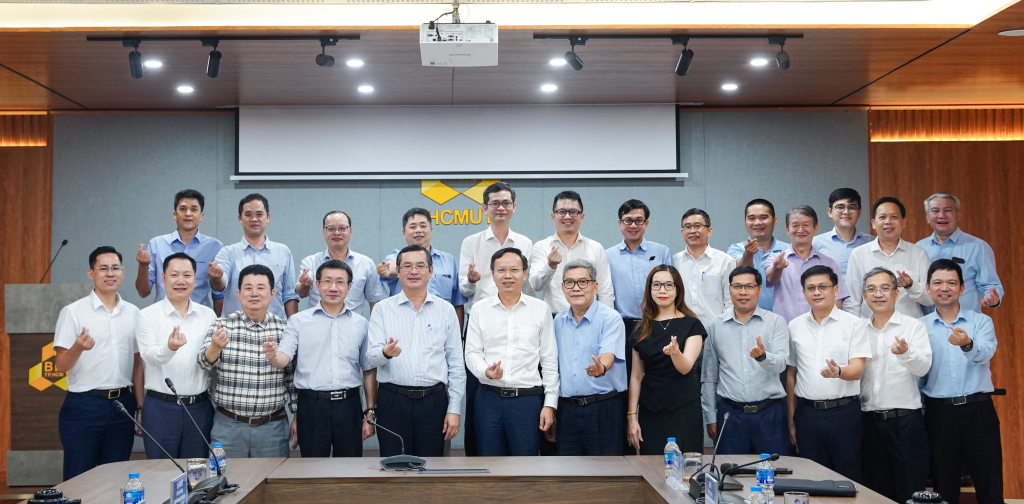
The session was co-chaired by Deputy Minister Nguyen Van Phuc and Prof. Dr. Mai Thanh Phong, President of HCMUT, with the participation of senior representatives from both parties.
Currently, Vietnam is making strong efforts to restart the Ninh Thuan 1 and Ninh Thuan 2 nuclear power plant projects. Within this context, preparing a high-quality workforce to serve operations at the plants, in particular, and the development of nuclear power in Vietnam, in general, is an urgent requirement.
The Government’s project titled “Training and developing human resources for nuclear power development until 2035” aims to train approximately 4,000 personnel by 2030 for the two power plants. This training requires a long-term strategic approach and, critically, active participation from educational institutions with sufficient potential for teaching and specialized training to serve the construction and operation of the plants directly.
Under the project, HCMUT is one of the 11 institutes, universities, and colleges assigned to develop human resources for the nuclear power sector in Vietnam.
During the meeting with MOET, representatives from HCMUT presented an overview of the university’s current status and development potential in nuclear-related training and research. The university currently offers an Engineering Physics program at the bachelor’s, master’s, and doctoral levels — a discipline with a professional foundation closely related to nuclear power. In addition, related fields such as mechanical engineering, mechatronics, electrical engineering, and thermal engineering also offer considerable supporting capabilities.
Prof. Dr. Mai Thanh Phong affirmed that these strengths provide a foundation for HCMUT to contribute effectively to the development of human resources for national strategic technology in general and nuclear technology in particular. Notably, the university plans to launch a Nuclear Engineering program in 2026, with an expected enrollment quota of 60 students per year.
Despite this potential, Deputy Minister Nguyen Van Phuc stressed the need for greater investment in faculty development and laboratory infrastructure for training and research. He noted that the Ministry is submitting a preferential policy to the Government for both instructors and students in the nuclear energy sector, including tuition fee waivers, scholarships, internship opportunities, and short-term training programs in countries with advanced nuclear industries.
The Deputy Minister also stated that MOET will develop standard training programs for the nuclear power sector and coordinate with corporations such as EVN and PVN to define specific workforce demands and job positions at the plants, thereby providing a basis for universities to tailor appropriate training programs.
He further emphasized the importance of close cooperation among universities, research institutes, and enterprises, encouraging them to form an effective shared-resource network to ensure practical and efficient implementation of training initiatives.
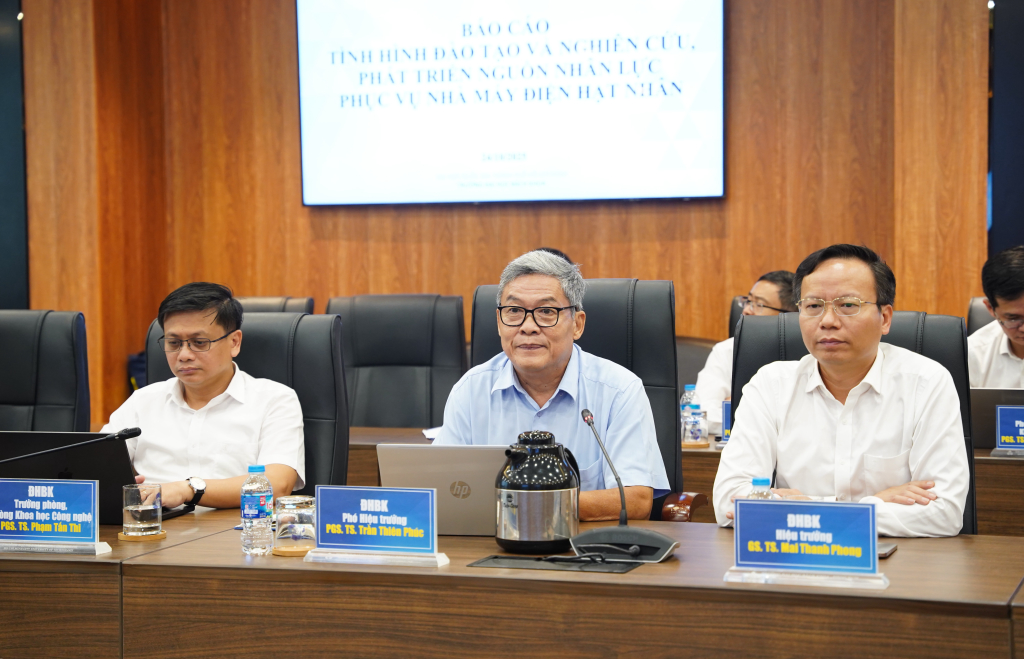
These recommendations align with the proposals from HCMUT. The university strives to become a regional hub for supporting short-term training and professional development in radiation safety, reactor management, and nuclear power technology for the Southern region. To achieve this, HCMUT proposed the construction of seven specialized laboratories and investment in modern equipment, enhancement of faculty and research expertise, formation of research groups, and cooperation with research institutes through a “triple-helix” cooperation model linking academia, industry, and government.
In his closing remarks, Deputy Minister Nguyen Van Phuc once again underscored the importance of training nuclear engineering professionals, affirming that this is not only a technical requirement but also a strategic mission to ensure national energy security and serve the development of high-tech industries in Vietnam.